
Care
10 min read
Safe gel removal at home and in the salon

By Andreea Mădălina
Founder, Fata cu unghiile
How gel comes off your nails matters at least as much as how it goes on. Done well, removal is less likely to leave the natural nail visibly stressed. Done badly, removal is one of the most commonly cited causes of nail damage among working manicurists. This article walks through what makes removal safer or riskier, when to choose salon over home, and how to approach home removal carefully when that's the path you're taking.
For the broader nail-care basics that protect against damage in general, see healthy nails fundamentals. This article focuses on removal mechanics specifically.
Why removal technique matters
The nail plate is made of layered keratin, so rough removal can disturb its surface. When gel polish bonds to your nail, it bonds to those layers. Removal that dissolves the bond between gel and nail without disturbing the underlying nail tends to leave the natural nail intact. Removal that uses more mechanical force than necessary can pull some of the surface layers off along with the gel.
The visible result of layer-disturbing removal includes nails that peel in flakes for weeks afterward, ridges in the surface, white spots, and a general feeling that the nails have been weakened by gel. The actual cause is often the removal rather than the gel itself, though poor application can also contribute.
This is one reason careful removal is worth the extra time it takes.
How acetone-soak removal works
Acetone breaks down the chemical structure of cured gel, softening it from a hard layer to a gel-like consistency that can lift away with minimal mechanical force. The process needs three things to work well:
Time. Acetone usually needs sustained contact to soften the product, and exact timing varies by product and thickness. Cutting the soak too short tends to mean the gel hasn't softened enough; soaking longer than necessary tends to dry the surrounding skin without much added benefit.
Heat. Acetone works faster when slightly warm. Salons often wrap the nail in foil after applying acetone-soaked cotton, which keeps the cotton in contact with the nail and retains a small amount of warmth.
Surface preparation. The top coat of a gel manicure is usually glossy enough that acetone has trouble penetrating it. Most removal protocols start with a quick file or buff of the surface to break the seal. This is the step most often skipped in home removal, and it's a common reason home removal fails.
Once the gel has softened, it should come away with light pressure rather than force. If it doesn't move easily yet, it's generally safer to soak a little longer than to force it.
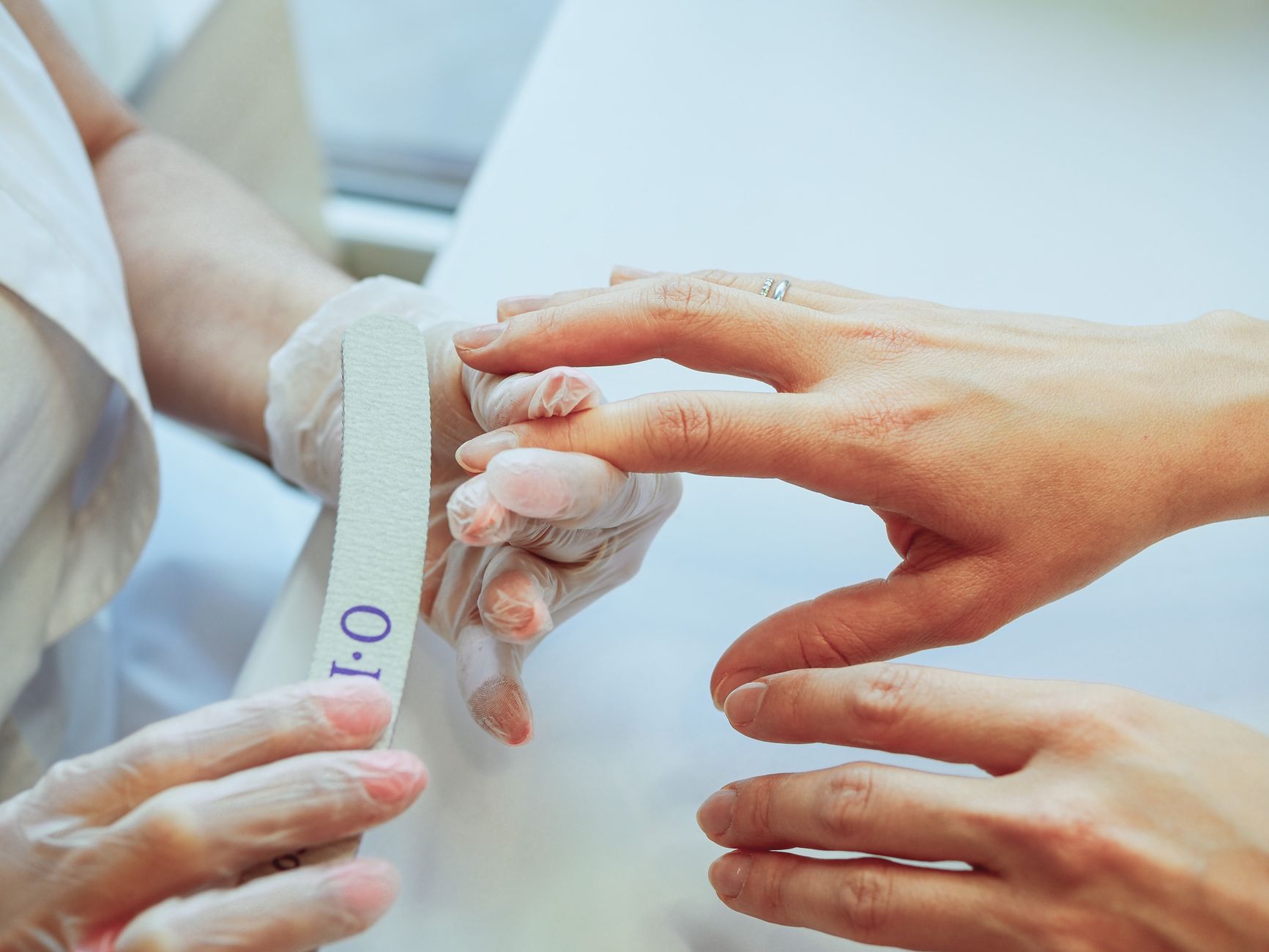
Whatever's left after the push goes through a final gentle buff with a fine-grit buffer to clean up residue. Aggressive buffing isn't necessary and risks thinning the natural nail.
The whole process takes 25 to 35 minutes for a standard semi-permanent manicure. Gel construction with thicker layers takes longer.
E-file removal in salons
Some salons use an electric file (e-file) instead of soaking. The artist runs a low-speed file across the gel surface, gradually filing layers down until only a thin film remains, which is then removed with a quick acetone application or a final buff.
E-file removal in skilled hands is faster, drier on the surrounding skin, and reasonable for clients with healthy nails. The trade-off is that an inexperienced artist with an e-file can file through the gel into the natural nail itself, which has the same kind of effect as peeling.

E-file removal generally works well on healthy nails with an experienced artist. It's a worse choice if your nails are already thin or damaged. Acetone soak is the gentler option in those cases.
Salon versus home removal
Professional removal is often quicker and more controlled than home removal. A skilled manicurist generally works through the soak-and-push process efficiently and with minimal disturbance to the nail surface. The same person doing it themselves at home, with less training and more impatience, can take longer and disturb more nail surface in the process.
If you have access to a salon, professional removal is usually the better choice. It costs 20 to 50 RON in Romania, often included or discounted if you're getting a fresh manicure in the same appointment.
Home removal makes sense in some situations: when salon access is genuinely limited, when you only need to remove one or two nails to repair them, or when you've learned the proper technique through enough salon visits to do it correctly yourself.
If you're doing home removal, the next section walks through the process.
How to approach gel removal at home
What follows is a general home method that should be checked by a working manicurist before publication and is described as orientation rather than as a strict protocol. Individual products and situations vary; if you're unsure, salon removal is the safer default.
You'll need: 100% acetone (standard "nail polish remover" with low acetone content tends not to work well on cured gel), cotton pads or balls, aluminium foil cut into ten small squares, an orange wood stick or cuticle pusher, a fine nail file, a fine buffer, and cuticle oil or hand cream for after.
The general process:
-
File the surface. Lightly file the top layer of each nail with a fine file. The goal is to break the gloss of the top coat, not to file off all the gel. Three or four passes across each nail is usually enough. Stop when the surface looks dull rather than shiny.
-
Soak cotton in acetone. Saturate a small piece of cotton for each nail. The cotton should be wet but not dripping.
-
Apply to the nail. Place the wet cotton directly on the nail, covering the entire gel surface.
-
Wrap with foil. Wrap each finger with a small foil square, sealing the cotton against the nail. The foil keeps the cotton in place and traps a small amount of warmth.
-
Wait. Around 10 to 15 minutes is a common starting point, but exact timing varies by product and how thick the gel layer is. The cotton needs to stay wet against the nail throughout.
-
Remove one nail at a time. Unwrap one finger and check. The gel should look soft, slightly bubbly or wrinkled if it's ready. Use the orange wood stick or cuticle pusher to gently push the softened gel off the nail. It should come away in soft layers without much resistance. If it's still hard or resists, rewrap and wait a bit longer rather than forcing it.
-
Buff lightly. Once the gel is off, a light pass with a fine buffer cleans up any remaining residue.
-
Hydrate. Acetone is drying. Wash your hands with soap to remove any residue, then apply cuticle oil and hand cream. Repeat the oil two or three times over the next 24 hours.
The whole process takes about 35 to 45 minutes. Rushing it is the most common cause of poor results.
Practices to avoid
A few approaches that look like shortcuts but tend to cause damage:
Avoid peeling gel off. Pulling gel off rather than dissolving it is a common cause of nail thinning. The bond between gel and the outer nail layer can be stronger than the bond between layers of natural nail, so peeling can take some of the natural nail with it. The result is often nails that peel and feel weak for several weeks until the affected layers grow out.

Don't use a metal file aggressively. Metal files can be too coarse for this work and can damage the natural nail. A fine glass or emery file with a light touch is gentler.
Don't use low-acetone "nail polish remover" on gel. Most consumer products labelled as nail polish remover contain only 30 to 60% acetone plus moisturisers and additives. Cured gel polish needs higher-concentration acetone to dissolve in a reasonable time.
Don't soak your hands in a bowl of acetone. Some online sources recommend this approach. It works mechanically but exposes the surrounding skin to far more acetone than the cotton-and-foil method, which is harsher on cuticles and the skin around the nails.
Don't try to file off all the gel without acetone. This works only if you stop precisely when you reach the natural nail, which is harder than it looks. The combined approach (file the surface seal, then dissolve the rest) is generally easier to do well.
Don't force a nail that isn't ready. If the gel doesn't push off easily after 15 minutes of soaking, soaking longer is usually safer than forcing it.
After removal
Your nails will look slightly different right after removal than they did before the manicure. They may feel thinner, look matte instead of shiny, or appear paler. This is usually normal. The natural nail surface picks up sheen from cuticle oil and from natural wear over a few days, and within a week or so most nails look healthy again.
If your nails look noticeably damaged after removal — peeling visibly, with ridges or white spots — that may be a sign the removal stripped some natural nail. Recovery generally happens through growth-out rather than active intervention, but in the meantime keeping nails short reduces stress on the weakened layers, daily cuticle oil supports the cuticle area, and avoiding further gel for a few weeks gives the nail a chance to recover.
For the broader maintenance practices that help nails recover and stay healthy, see healthy nails fundamentals.
Allergies and removal
If you've developed a sensitivity to gel products, removal becomes more important and trickier. The reaction is most often to uncured monomer in contact with skin during application, but improper removal can also leave residue that prolongs symptoms.
If allergy is a concern, it's better to prioritise professional advice and careful removal rather than choosing a method on this article alone. A dermatologist's input plus a manicurist who's worked with sensitive clients before is more reliable than self-directed home removal in that situation.
For more on allergic reactions to gel products, including what to do if you suspect one, see allergies and sensitivities to gel products.
What about UV exposure during removal?
E-file removal involves no UV light. Acetone soak removal with foil wraps also involves no UV exposure. The UV question is relevant during application (when hands are under the lamp during a service), not during removal.
For more on UV lamp considerations, see UV lamp safety.
Frequently asked
My nails feel weaker after every removal. What's going on?
Possible causes include removal that's disturbing the nail layers, picking at the gel between appointments, or repeated cycles without sufficient recovery time. Talking with your manicurist about their removal approach is a useful first step.
How often can I have gel removed and reapplied?
There isn't one simple frequency rule that suits everyone; nail condition and removal quality matter. Many people maintain semi-permanent manicures continuously for years without obvious issues, while others find their nails respond better to periodic breaks. Watching how your own nails respond is more reliable than any fixed rule.
Can I remove just one nail if it's damaged or lifting?
Yes, and this is often a good approach if a single nail is the problem. Remove just that one with the acetone-and-foil method, repair if needed, and let the others continue until your maintenance appointment.
Why do my nails peel for weeks after I remove gel?
Peeling after removal is often a sign that the removal disturbed some of the natural nail layers. The peeling is the affected layers separating. They generally grow out over weeks or months. During recovery, keeping nails short and well-oiled, and avoiding further gel until the peeling stops, can help.
Is there a "less harsh" way to remove gel?
Acetone is the chemical that works for most cured gel products. Some products marketed as "acetone-free gel removers" exist, but most either don't fully remove cured gel or take much longer. Acetone applied with the cotton-and-foil method is generally considered the gentlest practical option.
Bottom line
Salon removal is the safer default when accessible. Home removal can work with care, the right materials, and enough patience. Avoid peeling. Use cuticle oil afterward. The difference between healthy and damaged nails after long-term gel use comes mostly from how the gel comes off rather than how often it goes on.