
Techniques
11 min read
3D nail art

By Andreea Mădălina
Founder, Fata cu unghiile
3D nail art is the most dimensional decoration on the menu. Instead of a design painted flat onto the surface, small elements stand up off the nail itself, sculpted by the artist or applied as pre-made pieces. A sculpted rose on a single accent finger, a tiny bow on a bridal nail, an abstract raised swirl across a long stiletto. The look reads strongly in photographs and tends to be the kind of decoration people notice across a room. It also tends to be the most fragile and the most variable on price.
This article covers what 3D nail art actually is, how the sculpting works, the motifs that come up most often, what to expect on durability, and what to ask for at the salon. In Romanian salons, the service is usually called decor 3D (3D decoration) or unghii 3D (3D nails).
What it is
3D nail art is a category of decoration where elements are built up off the surface of the nail rather than painted onto it. Some elements are sculpted directly onto the nail with gel or acrylic during the appointment. Others are pre-made, often produced in moulds or bought from suppliers, and glued onto the cured nail surface.
The defining feature is the dimension. A flat painted rose lives on the nail's surface; a 3D sculpted rose has petals you can see from the side, with shadow and depth that catches light differently across angles. Even small 3D elements add a noticeable physical presence.
3D work is most often used as a feature on one or two accent nails rather than across all ten. Full sets of 3D-decorated nails do exist, particularly for editorial work, photoshoots, and competition pieces, but for everyday wear an accent nail tends to be the more practical choice.
How it's done
Three main approaches turn up in salons, and many artists use a combination depending on the design.
Gel sculpting. A thicker construction or sculpting gel is applied to the cured nail surface and shaped with fine brushes, pickers, or silicone tools while still uncured. The artist builds the element layer by layer, curing each thin layer under the lamp before adding the next. Petals, leaves, bows, and abstract shapes are commonly built this way. Gel sculpting tends to give softer, more rounded shapes and is generally more forgiving to work with than acrylic. The cured result is durable, can be coloured with pigment gels, and bonds well to the underlying gel surface.
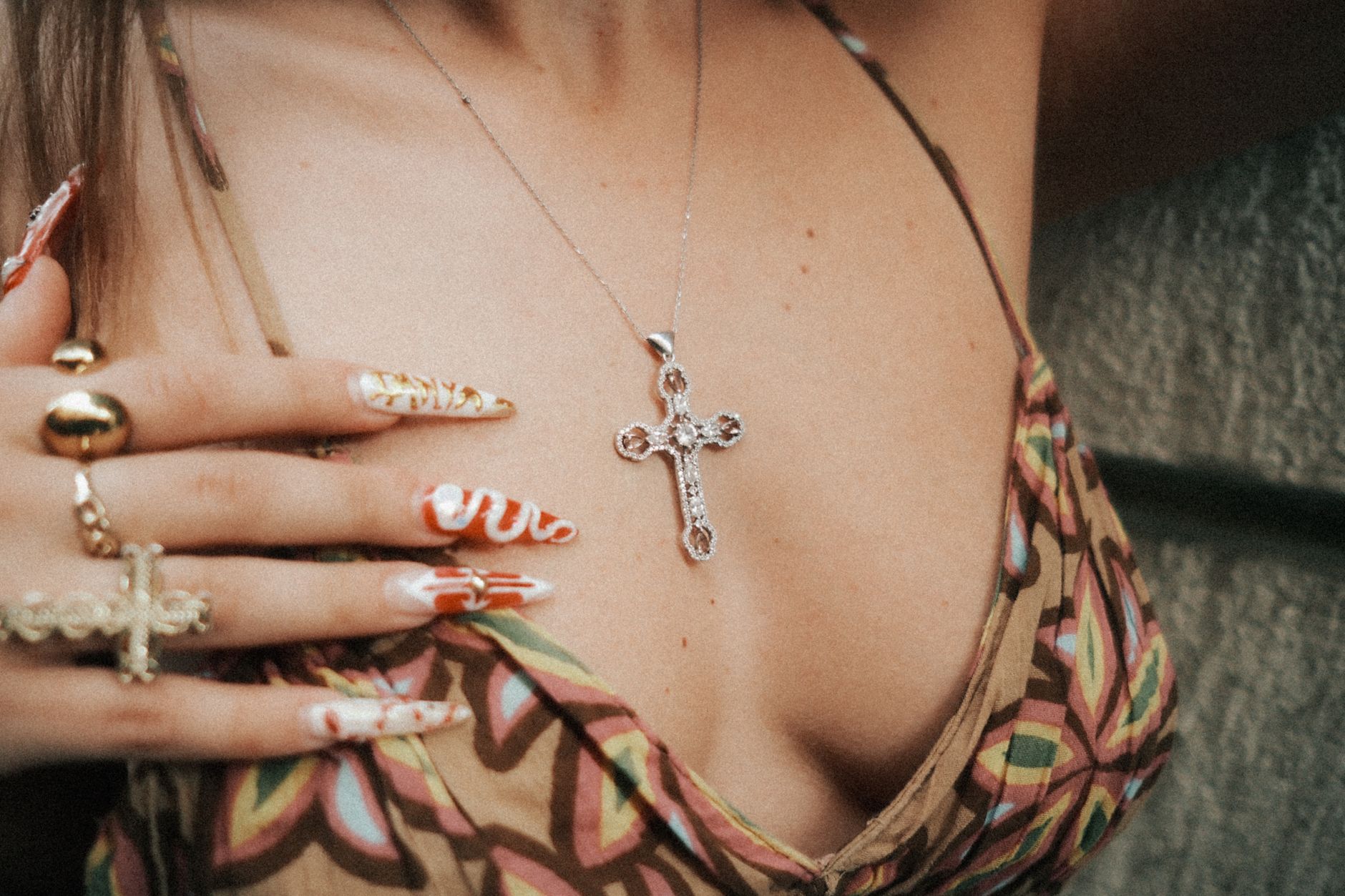
Applied embellishments. Pre-made elements such as resin flowers, metal charms, sculpted bows, pearls, and similar pieces are glued onto the cured nail surface, usually with a drop of clear gel that's then cured to lock them in. This approach is faster than sculpting from scratch and lets the artist offer styles that would take much longer to build by hand. Quality varies widely with the supplier; well-made resin pieces can look closer to sculpted work, while cheaper plastic pieces can look obvious.
After the 3D element is in place, a clear top coat usually goes around the base of the element rather than directly over the top, so the dimension stays sharp. Some elements are sealed with a thin gel coat for durability; others are left exposed for visual impact.
Most common motifs
A few motifs come up repeatedly in Romanian salons.
Florals. Sculpted roses, daisies, cherry blossoms, and abstract botanicals are the most-requested category. Bridal work in particular leans on small white or nude florals on the ring finger. Larger more dramatic florals turn up on stiletto and long almond shapes.
Bows. A tiny sculpted or applied bow, often in white, nude, or a metallic, has been a recurring trend in recent years. Coquette-style bows on short shapes have been especially visible.
Abstract elements. Raised swirls, textured ridges, sculpted lines, and 3D geometric shapes are common in editorial and fashion-forward work. These tend to be more design-driven and often pair with chrome or other striking finishes.

How long it lasts
3D elements tend to be the most fragile decoration on the nail and the durability conversation matters more here than for most other styles.
Sculpted gel and acrylic elements that are properly bonded to the underlying surface can hold up reasonably well for two to three weeks under normal wear, but heavy use shortens that significantly. Catching the element on fabric, hair, or pockets can pop it off. Larger elements (a tall sculpted rose, a long bow) catch more easily and tend to fail earlier than smaller flatter ones.
Applied pre-made embellishments depend heavily on the strength of the gel bond underneath. Well-applied charms can last the life of the manicure; poorly applied ones may come off within days.
If a 3D element pops off, the underlying gel surface often shows where it was sitting. Many salons will reattach or rebuild a lost element, though policies vary on whether that's free within a window. Worth asking about before the appointment.
For high-stakes events, booking close to the date is generally the safer plan. A 3D look is usually at its best in the first one to two weeks.
Who it's for
3D nail art can be a good choice if:
You want a feature look for a specific event. Weddings, photoshoots, parties, and birthdays are where 3D often makes the most sense. The fragility matters less when the wear window is short.
You like statement nails and don't mind being careful with your hands. 3D work rewards a gentler day-to-day routine.
You photograph your nails. Dimensional elements catch light and shadow in ways that flat designs can't, and tend to read strongly on Instagram.
You want one accent nail to carry the design while the rest stay simple. Accent 3D on the ring finger is a popular middle-ground option.
It may not be the right fit if:
You work with your hands a lot. Typing is generally fine, but cleaning, gardening, hair washing, and tasks involving fabric can shorten the life of any 3D element considerably.
You want a look that holds up consistently across three or four weeks. 3D fragility tends to outpace standard wear.
You want low-key, conservative nails. 3D is rarely subtle; even small elements stand out.
You're new to longer nail extensions. 3D often pairs with construction length, which carries its own learning curve.
How long it takes
3D work typically adds 60 to 150 minutes to the base appointment, depending on complexity. A single small sculpted bow on one accent nail might add 30 to 45 minutes. A more elaborate floral arrangement across two or three nails can add closer to two hours. Full sets of detailed 3D work occasionally run several hours and are usually booked as a dedicated appointment rather than a regular maintenance slot.
It's worth letting the salon know in advance that you want 3D work so the appointment can be booked for the right length. Squeezing dimensional sculpting into a standard slot tends to lead to rushed elements that don't sit as cleanly.
What it costs in Romania
Prices below are approximate ranges as of 2026. Treat them as orientation rather than authoritative; check with the specific salon for current pricing.
3D nail art is one of the more variable pricing categories in Romanian salons because the work scales so much with complexity. Several factors affect cost: the number of decorated nails, whether elements are sculpted from scratch or applied as pre-made pieces, the size and detail of each element, and whether colour and metallic finishes are added.
In Bucharest as of 2026, 3D additions to a base manicure roughly fall into these ranges:
A single small sculpted accent (a tiny bow or a small flower on one nail) often adds around 40 to 80 RON to the appointment.
A more developed accent (sculpted floral arrangement across two or three nails, or several applied charms) often adds 80 to 200 RON.
Elaborate 3D work across multiple nails or a full bridal-style design can add 200 to 400 RON or more.
Outside Bucharest, prices generally trend lower, with smaller cities often 20 to 35% below.

What to ask your manicurist
A few questions specific to 3D work:
Do you sculpt from scratch or use pre-made elements? Both approaches are valid; the price and the look differ. An artist who does both can often help you decide which fits your design and budget.
Can I see recent 3D work in your portfolio, particularly in the style I want? 3D skill is highly style-dependent. An artist who does beautiful florals may not have much experience with bows or abstract elements. Ask specifically for examples close to what you're picturing.
How fragile is the design you're proposing for daily wear? A direct conversation about durability before the appointment usually helps set expectations. An honest artist will often suggest scaling a design down if it's likely to fail under your typical hand use.
What happens if an element falls off? Many salons will reattach or rebuild a lost element within a short window. Policies vary, so worth confirming up front rather than assuming.
Should I avoid anything specific in the first 24 hours? Some artists prefer that newly sculpted elements aren't soaked in hot water or exposed to harsh chemicals immediately after curing. Specifics depend on the products used.
If you have a reference photo, bringing it usually helps more than describing the design verbally. 3D motifs are easier to interpret visually than in words.
Care between appointments
The general rules for any gel or construction manicure apply: daily cuticle oil, gloves for cleaning, no picking. A few 3D-specific points are worth adding.
Be aware of the elements when handling things. Reaching into pockets, pulling on tights, drying your hair with a towel, and similar everyday actions can catch on raised decorations. Adapting around the design for the first week or two extends its life noticeably.
If an element starts to feel loose, contact your salon rather than waiting for it to come off entirely. A reattachment is usually cleaner than a rebuild.
Avoid trying to glue a fallen element back on at home with consumer adhesive. The chemistry isn't the same as gel, the repair tends not to last, and salon repair usually becomes harder afterwards.
For the broader nail-care basics, see healthy nails fundamentals.
Common questions
Can I get 3D nail art on natural-length nails?
Smaller elements work fine on natural length. Larger or more elaborate designs generally need the additional surface area of construction-length nails to sit properly. A small sculpted accent on a ring finger is often the most practical option for natural-length work.
Is acrylic 3D more durable than gel 3D?
Both can be durable when applied well. Acrylic tends to hold sharper edges and finer detail, while gel tends to be more forgiving to apply and easier to repair if an element loosens. The artist's experience with their preferred medium usually matters more than the medium itself.
Can 3D elements be reused or moved?
Generally no. Sculpted elements are bonded to the gel surface and don't transfer. Some applied charms can be removed and reused if they're carefully soaked off, though many degrade in the acetone bath. Treat 3D work as single-use for the manicure it's done in.
Will 3D damage my natural nails?
Not directly. The 3D element itself sits on top of the gel layer and the underlying nail wears the same as it would with any gel service. As with any gel work, removal is the part most associated with nail health, so following normal removal practice matters. For removal mechanics, see safe gel removal.
Can I do 3D nails at home?
Pre-made charms are easy to apply at home with clear gel and a UV/LED lamp. Sculpting from scratch is much harder and tends to take significant practice before the results look polished. For events that matter, salon work is generally worth it.
How does 3D pair with other techniques?
3D often combines with chrome, ombre, baby boomer, French, and crystal work. A common pairing is a clean French or baby boomer base with a single 3D accent on the ring finger. Chrome under a sculpted floral can produce a striking metallic effect, though the chrome rub-in needs to happen before the element is sculpted.
Bottom line
3D nail art can be a good choice when you want a high-impact, dimensional look for a specific event or as a feature on a few accent nails. It tends to be the most photographic and the most fragile decoration on the menu, so finding an artist whose 3D portfolio in your preferred style looks consistent is generally the most useful step. For everyday wear over three or four weeks, a flatter design often holds up better visually; for a wedding, a photoshoot, or any one or two weeks of standout impact, 3D generally delivers.