

Trends
10 min read
Bridal nail planning

By Andreea Mădălina
Founder, Fata cu unghiile
Wedding nail planning tends to be its own category. Most manicures are about the appointment; bridal manicures are often more about the photographs that will exist for years afterward. The choice of style, the timing of the appointments, the relationship with the artist, and the day-of logistics tend to matter more than for everyday work. This article walks through how to plan nails for your wedding day, starting roughly six months out, with practical advice at each stage.
The advice here is mainly for the bride; bridesmaids and mother-of-the-bride bookings work similarly but generally with less lead time and precision needed.
Six months before
This is roughly when more serious planning tends to start.
Decide on a tier of formality. Are you going classic and elegant, modern and minimal, or bold and statement? The answer tends to shape subsequent decisions. Many brides land on classic-and-elegant, partly because the photographs tend to age well.
Consider whether you want extensions or natural length. If you have short or weak natural nails and want longer for the wedding, gel construction is one common answer, but it tends to require more lead time. Six months is generally plenty; less than three months can be tight depending on your nail growth.
Start basic nail care. Cuticle oil daily, hand cream after washing, gloves for cleaning. Several months of consistent care can produce visibly better natural nails on the wedding day, regardless of what's applied on top.
Identify candidate artists. Look at portfolio work, read reviews, ask friends who recently married. Bridal nail artists in Romania are often booked several months ahead for major wedding seasons (May-October). Busy ones may fill their calendars further in advance.
Don't book yet. Six months tends to be a research stage rather than a commitment stage. Visiting two or three salons, getting standard manicures with each, and seeing whose work and personality you trust can be a useful first step.
Four to five months before
Book the bridal artist. Once you've identified the right artist, locking in the wedding-day appointment tends to be the next step. Many artists charge a small deposit to secure the date; the amount and policy varies by salon.
Discuss the look. Bring inspiration photos, talk through your dress style, your skin tone, your overall wedding aesthetic. An experienced bridal artist may offer suggestions and recommend specific styles based on what they've seen work for other clients.
Schedule a trial. Many bridal artists offer a trial appointment, often six to eight weeks before the wedding. The trial can let you see the look on your actual hands, photograph it, and decide whether adjustments are needed.
Start the gel cycle if you're going with construction. If your nails will be gel construction on the wedding day, having the construction in place several weeks ahead generally gives time for one maintenance appointment before the wedding. Starting too late means the wedding-day appointment becomes the new construction itself, which can be more variable than a maintenance visit.
Three months before
Have the trial. The artist creates the actual planned look, you wear it for a few days, and you photograph it.
After the trial, it's worth evaluating honestly:
- Does it photograph as well as you hoped?
- Does it suit your hand shape, finger length, skin tone?
- Does it work with your dress and accessories?
- Did it last the way you'd want?
If something's off, this is generally when to adjust. Either tweak the same look (different shade, different decoration density) or pivot to a different style entirely. The trial tends to be the most useful safety net for getting the right answer.
Continue gel maintenance if applicable. Every 3-4 weeks is typical. Keeping the same artist tends to help with consistency.
Maintain home care. Cuticle oil, hand cream, gloves. Several months of consistent care often shows up visibly.
One month before
Finalise the look. Major changes from this point tend to be harder to accommodate. The artist generally needs time to plan their day-of timing and any specialty products or stones they'll need to source.
Plan day-of logistics. What time is the appointment? Is the artist coming to your getting-ready location, or are you going to the salon? Allowing at least two hours for the appointment itself, and ideally a buffer of 30-60 minutes for unexpected issues, tends to be sensible. Bridal nail appointments often run longer than predicted.
Schedule the final maintenance (gel construction) or final application appointment (semi-permanent). For gel construction, the maintenance is often 1-2 weeks before the wedding so the nails feel fresh but settled. For semi-permanent, the actual application is often 2-5 days before the wedding.
Discuss removal strategy. What happens to the nails after the wedding? Some brides remove them within days; others keep them for the honeymoon. Discussing this with the artist in advance can help with planning.
Two weeks before
Avoid experimenting. New products, aggressive home filing, or skincare routines that affect cuticles can create surprises at the wrong time. Sticking with what's been working tends to be safer.
Inspect for any concerns. If a nail has cracked, peeled, or looks weak, addressing it now rather than at the wedding-day appointment generally creates more options.
Apply hand cream and cuticle oil consistently. If you've been inconsistent, this is a sensible time to ramp up. Hydrated, even-looking skin around the nails tends to photograph better.
Confirm the wedding-day appointment. Time, location, what's included. Confirm any deposits paid. Make sure both parties have the contact details.
The week before
Don't get a non-wedding manicure. The wedding-day appointment is generally best left as the only nail service that week.
Hand and skin care continues. Generously.
For semi-permanent brides: the appointment often happens 2-5 days before the wedding. Soon enough that the polish feels fresh, far enough that any allergic reaction or issue would generally have time to manifest before the day itself.
For gel construction brides: the maintenance often happens 1-2 weeks before, with no further appointments planned. The construction is then at peak appearance for the wedding day.
The day before
Prep your hands. Light hand cream. No new products. Avoid hot baths or anything that might dry skin or cuticles excessively.
Confirm your morning schedule. What time do you need to be ready, what time does hair start, where do nails fit in if a touch-up appointment is scheduled.
Have any backup supplies ready. Cuticle oil, fresh top coat (mainly relevant for regular polish), hand cream. The artist will likely bring all of this, but having your own can be reassuring.
The wedding day
Wear gloves where possible during morning prep. Especially during anything involving water or chemicals.
Try not to pick at cuticles when nervous. Your nails are about to be photographed extensively.
The artist will likely arrive with everything needed. Useful to provide: a clean, well-lit space to work in, water or coffee for the artist, music if you want, comfortable seating.
Allow time. Bridal nail appointments often run 30-60 minutes longer than expected. Scheduling the artist into a tight slot before another non-negotiable can create unnecessary stress.
The final touch-up. Some brides schedule a 15-30 minute touch-up between hair/makeup and dress, just to refresh anything that got smudged or to add fresh top coat. Worth budgeting time for if it matters to you.

Choosing the look
A few categories of wedding nail look that tend to work well:
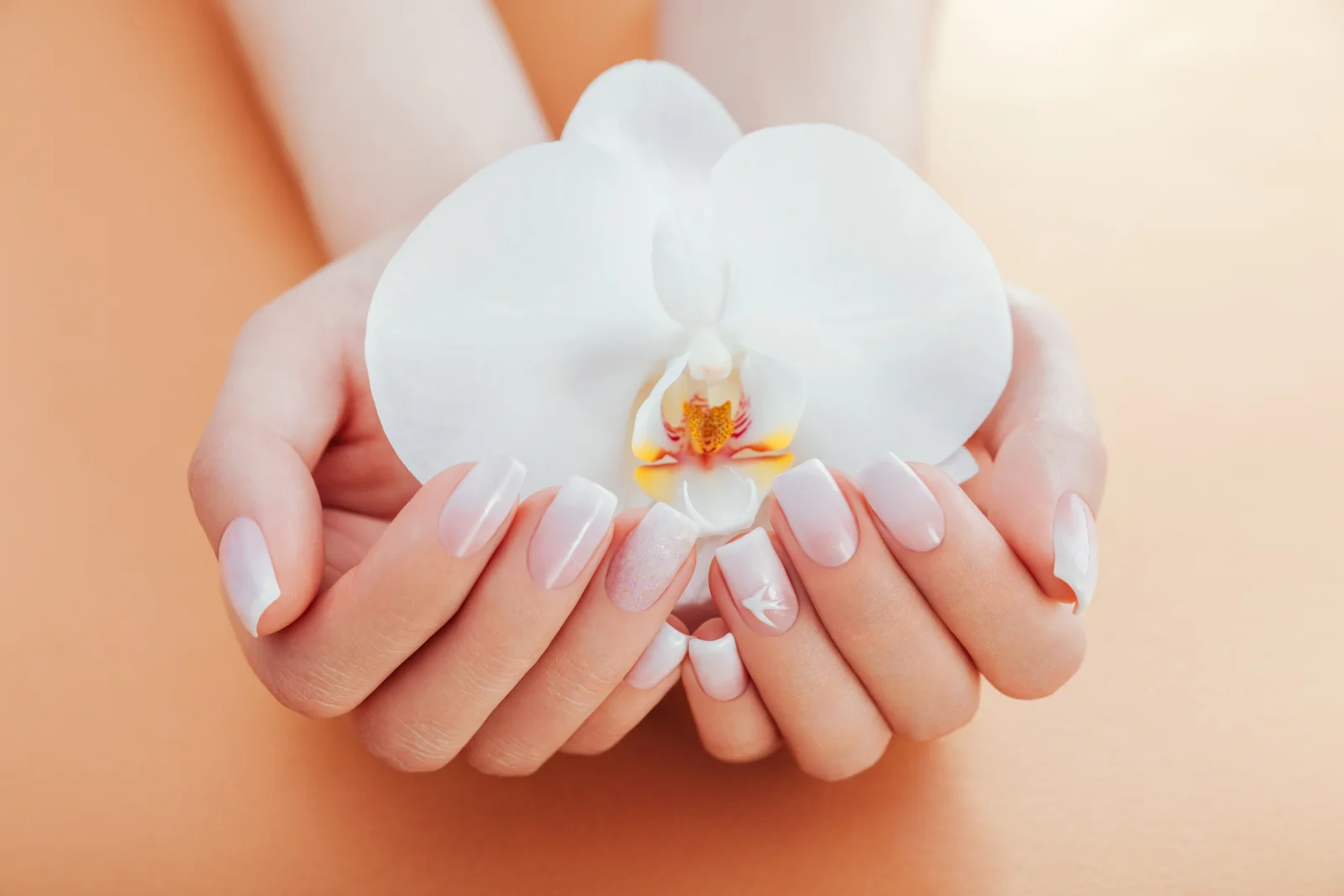
Baby boomer. A popular bridal choice in recent years. Soft pink-to-white gradient. Suits a wide range of dress styles, photographs nicely, and tends to age well in photographs.
Soft French (micro or classic). Traditional, elegant, formal. Tends to work well on long nail beds and almond shapes.
Nude with subtle accent. Single neutral colour with a few small Swarovski stones on one or two nails. Modern, minimal, often photographs well in close-ups.
Soft pink monochrome. Single neutral colour, no design. One of the simpler choices and harder to get wrong. Suits brides who want to keep nails simple and let the dress and accessories carry more of the visual.
Bold red or burgundy. For brides going more dramatic. Less mainstream as a bridal choice but increasingly seen for autumn and winter weddings.
Heavy nail art with multiple colours, characters, themes. Can read as busy in close-ups and may compete with the dress. Some couples enjoy this; others find they'd have preferred something simpler in retrospect.
Very long stiletto extensions. Higher maintenance, can be harder to live with during the day, and may catch on dress fabric. Worth trialling first.
Strongly trend-driven looks. Wedding photographs tend to exist for many years; some brides find that classic styles age better than highly trend-driven ones, though tastes vary.
What to budget
Prices below are approximate ranges as of 2026. Treat them as orientation rather than authoritative; check with the specific salon for current pricing.
Bridal nail packages in Romania vary widely:
Premium Bucharest bridal package with consultation, trial, and wedding-day appointment: typically 600-1200 RON.
Mid-tier salon with similar structure: typically 400-800 RON.
Budget option (single appointment, no trial): typically 200-400 RON, though without a trial there's less room to course-correct if something doesn't suit you on the day.
The budget should generally also include the maintenance appointments leading up to the wedding (if you're on gel construction) and any travel fees for the artist coming to you on the wedding day.
For many weddings, total nail-care spending across the four to six months of planning lands somewhere in the 1000-2500 RON range. Significant but typically small relative to total wedding cost.
What can go wrong
A few honest issues worth planning for:
The artist cancels. Uncommon but it does happen. Many established artists will refer you to a colleague if they have to cancel; not all do. Working with an established salon (rather than a freelancer with no backup) can reduce this risk somewhat.
Allergic reaction. Uncommon but timing-sensitive. A trial six to eight weeks ahead exists partly to surface this; if you react then, there's generally time to switch products.
A nail breaks the day before. Annoying but usually fixable. Many bridal artists offer touch-up appointments for situations like this. Having their phone number for emergencies tends to help.
The look doesn't suit you on the day. This is part of what the trial is for. Skipping the trial to save time or money tends to be one of the more common sources of wedding-day regret.
Weather or transport disruption. Planning logistics with margin tends to help. The artist showing up an hour late shouldn't have to compress the rest of your day.
Common questions
Should I match my bridesmaids?
Personal preference. Some brides like everyone in coordinated nails (same colour, slightly different style); others prefer the bride to be distinct. There's no fixed rule.
How long do bridal nails last after the wedding?
Generally the same as the underlying service. Semi-permanent: typically 2-3 weeks. Gel construction: typically 3-4 weeks before maintenance. Many brides remove them after the honeymoon and return to natural for a few weeks before deciding what's next.
Can I have my nails done by my regular manicurist or do I need a bridal specialist?
If your regular manicurist does work you're happy with and is comfortable with bridal-level pressure, that can work well. If they're a generalist who doesn't usually do wedding work, a bridal specialist may be worth considering. The trial often reveals whether they're a good fit.
What if my regular artist isn't available the day of the wedding?
Finding a backup artist a few months ahead tends to be safer than waiting until the last week. Salons can often recommend colleagues, and bridal-friendly artists can often suggest each other.
Should I do my own nails to save money?
For many brides, professional work is generally worth the cost. Home manicures can be recognisable as home manicures in close-up photographs, and the wedding day is one of the situations where the difference tends to show.
Should the groom get his nails done?
Optional. A clean, well-shaped, buffed natural manicure tends to suit most grooms. Some prefer a clear top coat for shine. Polish on grooms is less traditional but increasingly accepted.
Bottom line
Bridal nail planning tends to be a multi-month process that pays off in photographs that will exist for years. The rough milestones: research and decide several months out, book the artist a few months ahead, trial perhaps three months out, finalise one month out. Classic styles tend to age better than trend-driven ones, though tastes vary. Having a backup plan helps. Budgeting for the planning appointments as well as the wedding-day work is generally sensible.
The execution often matters more than the design choice itself. A simple baby boomer done well tends to look better than an elaborate design done unevenly.