

Services
10 min read
Polygel

By Andreea Mădălina
Founder, Fata cu unghiile
Polygel sits between acrylic and gel, borrowing the structural strength of one and the gentler working profile of the other. The product comes out of a tube as a putty, gets shaped on the nail with a brush dipped in slip solution, and cures hard under a UV or LED lamp. It's a more recent option in the construction category and has been gaining ground in Romanian salons over the past few years, particularly with clients who like the idea of acrylic-style strength without the strong odour.
This article covers what polygel actually is, how it differs from gel construction and from acrylic, what the appointment looks like, durability, pricing in Romania, and what to ask before you book.
What it is
Polygel (sometimes written poly gel or acrygel, depending on the brand) is a hybrid product that combines features of acrylic and hard gel. It contains acrylic-style polymers suspended in a gel base, which gives it a thick, putty-like consistency at room temperature. Unlike acrylic, it does not need a liquid monomer to activate. Unlike most construction gels, it does not self-level on the nail; the artist places it where they want it and shapes it with a brush.
The "slip solution" is what makes the product workable. It's a clear liquid the artist dips the brush into to keep the polygel from sticking, allowing them to spread, sculpt, and smooth the product into the desired shape before curing. The polygel itself stays put until light cures it, which gives the artist time to work without rushing.
Brand names you may see in Romanian salons include PolyGel by Gelish (the original commercial product, popularised the category), MollyLac Polygel, Indigo Master Polygel, and various offerings from Cupio and other regional distributors. Availability varies between salons and changes over time.
One feature worth a measured note: polygel does not have the strong odour associated with traditional acrylic. Liquid monomer in acrylic systems gives off a distinctive, fairly assertive smell. Polygel is comparatively low-odour, which some clients and artists find more comfortable in smaller salon spaces.
How the appointment works
A polygel appointment for a new set typically runs 90 to 150 minutes, somewhere between a semi-permanent manicure and a full gel construction. Here's roughly what to expect.
The manicurist starts with cuticle care and shaping, the same as any manicure, then dehydrates and primes the natural nail surface so the product will bond.
For length, the artist places either a paper or metal form under the natural nail or applies a dual form (a clear plastic mould shaped like the finished nail). They squeeze a small amount of polygel from the tube onto the form or directly onto the nail.
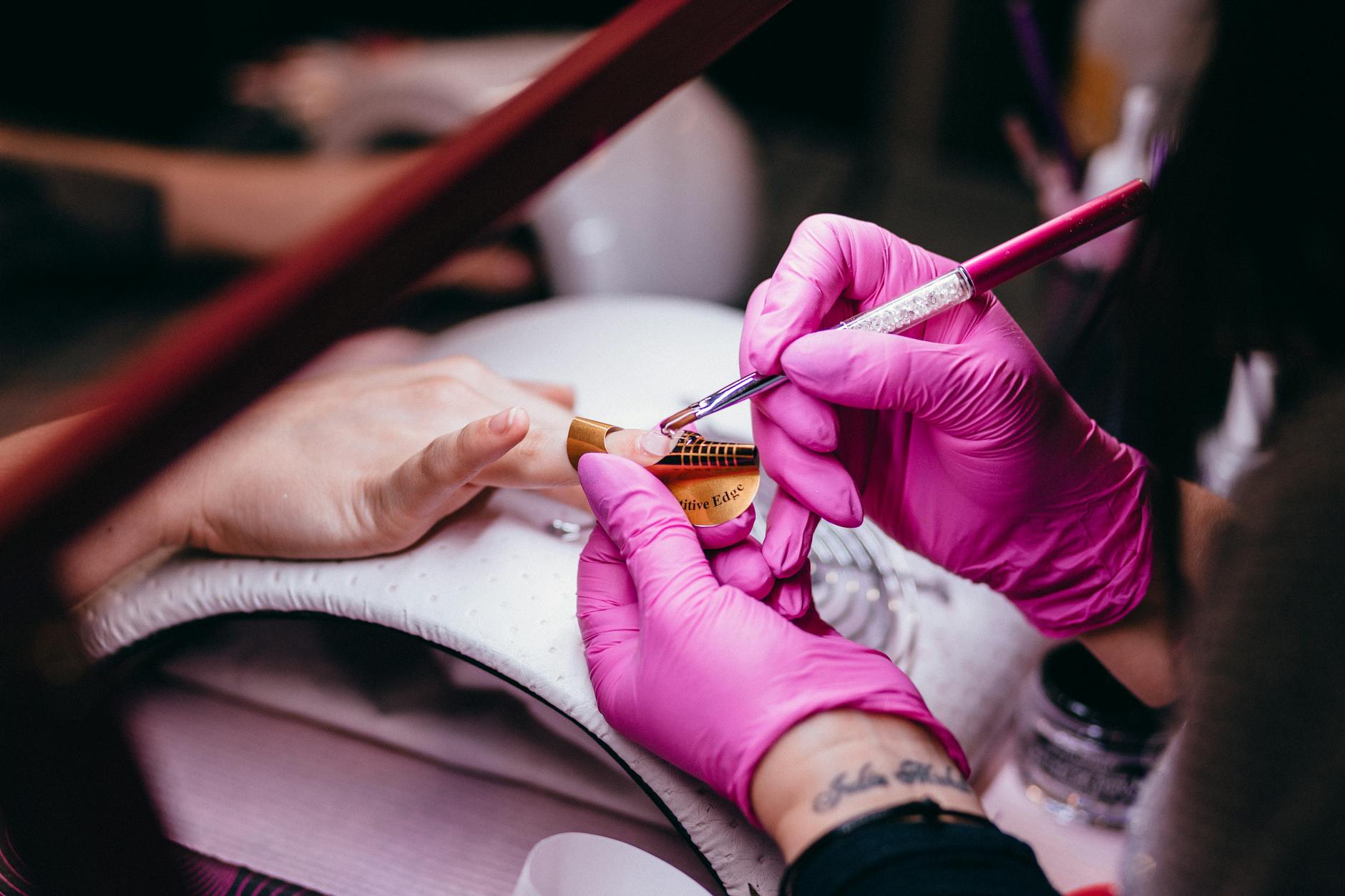
Once all ten nails are built and cured, the form (or dual form) comes off and the artist files the surface to refine the shape, smooth any irregularities, and create the final contour. Colour is then applied as gel polish over the polygel base, with each layer cured in turn. A top coat seals everything and gets a final cure.

How long it lasts
A well-applied polygel set typically lasts three to four weeks before maintenance becomes visible, similar to gel construction. The growth at the cuticle line is usually what prompts most clients to book a refill or rebuild rather than the structure itself failing.
Polygel tends to be less brittle than traditional acrylic, which can mean fewer hairline cracks at the stress point for clients whose hands take a beating. It also tends to be lighter on the nail than thick gel construction, which some wearers find more comfortable, particularly at longer lengths.
What affects durability is much the same as for any construction service. The artist's technique, especially apex placement and overall thickness, generally matters more than the brand of product. Lifestyle factors like cleaning, manual work, and nail picking will shorten wear. Daily cuticle oil tends to help; well-hydrated nails flex slightly with movement, while dry nails are more likely to crack the layer.
Polygel is often described as easier to remove than acrylic. Whether this matches your experience depends on the specific product and the removal method your manicurist uses. E-file removal is common for polygel; some artists also use acetone soak. Either approach can work in skilled hands.
Who it's for
Polygel can be a good fit if you want acrylic-level strength without the strong odour, if you've found gel construction a bit heavy or thick on your nails, or if you're sensitive to the smell of liquid monomer in salon environments.
It can also work well for clients who want a moderately long, sculpted shape but don't need the maximum durability of acrylic. The product holds shape well during application, which can produce a clean apex and even surface when the artist takes their time.
It's not necessarily the right pick if you want very dramatic length or extreme stiletto shapes that put high leverage on the structural bond; in those cases, traditional acrylic can offer more rigidity. It's also not the cheapest option in the construction category, so if budget is the primary driver, semi-permanent on natural nails or a basic gel build may suit better.
If you have an active gel allergy, polygel is not a workaround. The product still contains methacrylate-family ingredients, and people who react to gel polish or hard gel often react to polygel as well. A dermatologist is the right person to advise on a specific case. For a broader picture on this, see allergies and sensitivities to gel products.
If you're pregnant and considering any longer salon appointment, the most useful person to ask is your doctor. Polygel's lower odour profile compared with acrylic may be a comfort factor for some, but ventilation still matters and exposure questions are best handled with medical advice.
What it costs in Romania
Prices below are approximate ranges as of 2026. Treat them as orientation rather than authoritative; check with the specific salon for current pricing.
In Bucharest, a polygel new set on short to medium-length nails typically falls in the 180 to 280 RON range. Adding French, baby boomer, or design work can bring the total higher, often into the 250 to 350 RON range depending on complexity. Premium salons with experienced artists charge meaningfully more, particularly for elaborate finishing or longer lengths.
Polygel pricing tends to sit slightly below acrylic and roughly in line with gel construction at most Romanian salons, though the spread varies by location and artist.

The cost difference between brands of polygel is usually relatively small. The cost difference between artists tends to be larger. Many working manicurists would suggest prioritising the artist's skill and portfolio over the specific product line used.
What to ask your manicurist
A few questions worth raising before or during the appointment.
Do you use a paper form, metal form, or dual form? All three are valid for polygel. Dual forms can produce a smooth underside and a consistent shape with less filing. Paper and metal forms allow more custom sculpting. The artist's preference is fine; knowing which they use sets your expectations.
How do you build the apex? The apex is the slight peak in the central area of the nail that distributes pressure. An experienced artist can usually describe how they shape it and why. Vague answers may suggest less depth of training, though portfolio work is usually a more reliable signal than a verbal answer alone.
What's your removal method? E-file removal is common for polygel, sometimes followed by a brief acetone soak for any remaining base layers. Some artists prefer a longer acetone soak from the start. Both can work; ask which they use, and mention any concerns about acetone or filing sensitivity.
Can I see recent polygel work in the length and shape I want? Sculpting skills don't always transfer cleanly between styles. An artist who does precise medium-length almond work may be less polished on long coffin or stiletto. Look at examples in the style you actually want.
What products do you use? PolyGel by Gelish, MollyLac, Indigo Master, and others are common in Romanian salons. The brand is less important than how the artist uses it, but it can be useful to know if you have a preference or sensitivity to a particular line.
If anything during the appointment feels rushed, sloppy, or unclear, speak up. Polygel work is too long and too expensive to walk away dissatisfied.
Care between appointments
Daily cuticle oil. The same advice that applies to any gel-family service applies here. Hydrated nails flex with movement, dry nails crack the structural layer.
Wear gloves when cleaning, washing dishes by hand, or working with hot water and detergents. Heat softens the layer slightly and can accelerate breakdown over time.
Avoid using your nails as tools. Letter openers, the pad of your fingertip, and small kitchen tools are all friendlier to a polygel set than prying at edges with a thumbnail.
If a nail cracks or lifts between appointments, resist the urge to fix it at home with super glue. Trapped glue against the natural nail can cause irritation. A quick repair appointment with your manicurist is the safer route.
For the broader nail-care basics that apply between any gel-family appointments, see healthy nails fundamentals. For the removal mechanics specifically, see safe gel removal.
Common questions
How is polygel different from acrylic?
Acrylic uses a powder-and-liquid system that hardens through a chemical reaction in air, with a fairly strong odour from the liquid monomer. Polygel comes ready-mixed in a tube, contains no liquid monomer, and cures under a lamp rather than in air. Polygel tends to be lighter on the nail and less brittle than traditional acrylic, while acrylic tends to be slightly more rigid for very long or extreme shapes. Both can produce excellent results in skilled hands.
How is polygel different from gel construction?
Gel construction usually uses a self-levelling structural gel that flows on the nail before curing, requiring the artist to work quickly and tilt the nail to control the shape. Polygel is putty-like and stays where the artist places it, which can give more working time and more control over the apex. Polygel sets are sometimes described as lighter than gel construction at similar lengths, though this varies by product and how the artist builds.
Will it ruin my natural nails?
Generally not, when applied and removed well. Damage commonly attributed to construction services often comes from poor removal (peeling, aggressive filing) or over-aggressive prep before application. If your nails were damaged by previous work, technique is usually a more likely cause than the category itself.
Can I do this at home?
Polygel home kits exist and have become more widely available. Sculpting polygel well takes practice; amateur attempts often produce thick, uneven, or poorly-shaped nails that don't hold up well. The slip-solution technique looks straightforward in tutorials but takes time to develop. For most people, professional application produces noticeably better results.
How is polygel removed?
E-file removal is common, with the artist filing down most of the product and soaking off any remaining base layers in acetone. Some artists use an acetone-only soak. Either approach can be gentler than the methods sometimes used for traditional acrylic, though the artist's care matters more than the method itself.
Bottom line
Polygel can be a good choice if you want acrylic-style strength without the strong odour, or if you've found traditional gel construction a bit heavy at longer lengths. It's a more recent option in the construction category and is increasingly seen in Romanian salons, with experienced artists often producing clean, comfortable, durable sets. As with any construction service, the artist tends to matter more than the product. Find a manicurist whose polygel work in your preferred shape looks consistent across their portfolio, expect prices in roughly the 180 to 280 RON range for a new set in Bucharest, and plan for maintenance every three to four weeks.