
Decor
9 min read
3D sculpting elements

By Andreea Mădălina
Founder, Fata cu unghiile
Sculpted 3D decor sits at the dimensional end of the nail decoration menu. Where flat nail art lives on the surface, a 3D element rises off the nail itself with petals, ridges, or shaped pieces that throw shadow and catch light from every angle. It tends to be the kind of decoration people notice across a room, and it tends to be the most considered choice when an event calls for something that photographs strongly.
This article is about the aesthetic side of 3D sculpted decor: the motif categories that come up in Romanian salons, when each tends to suit, and how 3D pairs with other decoration like crystals, foil, and chrome. For the application side, including how the elements are sculpted and the materials involved, see the 3D nail art technique article.
What 3D sculpted decor looks like
The visual signature is dimension. Even a small element, a few millimetres tall, reads completely differently from a flat painted equivalent. Petals carry shadow on their underside. Ridges separate cleanly from the nail surface. Edges catch highlights instead of disappearing into a top-coat sheen.
That dimension is also why 3D decor tends to draw attention even when the rest of the nails are quiet. A single sculpted accent on the ring finger over a nude or French base is one of the most common configurations, and it works precisely because the contrast between the calm fingers and the dimensional one carries the look. Full sets of 3D-decorated nails exist, and editorial work makes a feature of them, but for everyday wear an accent approach tends to be the more wearable option.
The other thing worth noticing is texture. Flat decoration like foil flakes or hand-painted line art has visual texture but a smooth surface; 3D decor has both. A sculpted rose feels raised under the fingertip, a textured swirl has actual ridges, a small applied charm has its own surface character. Some people love that physicality; others find the catch-on-fabric reality enough to keep them in flatter territory.
Common motif categories
A few broad categories cover most of what comes up in Romanian salons.
Florals. Sculpted roses, daisies, cherry blossoms, magnolias, and abstract botanicals are the most-requested 3D motif. Bridal work in particular leans heavily on small white or nude florals, often on the ring finger. Larger more dramatic florals, sometimes with coloured pigment or pearl centres, turn up on stiletto and long almond shapes for events. Florals tend to feel timeless rather than trendy, which is part of why they keep their place at the centre of the category.

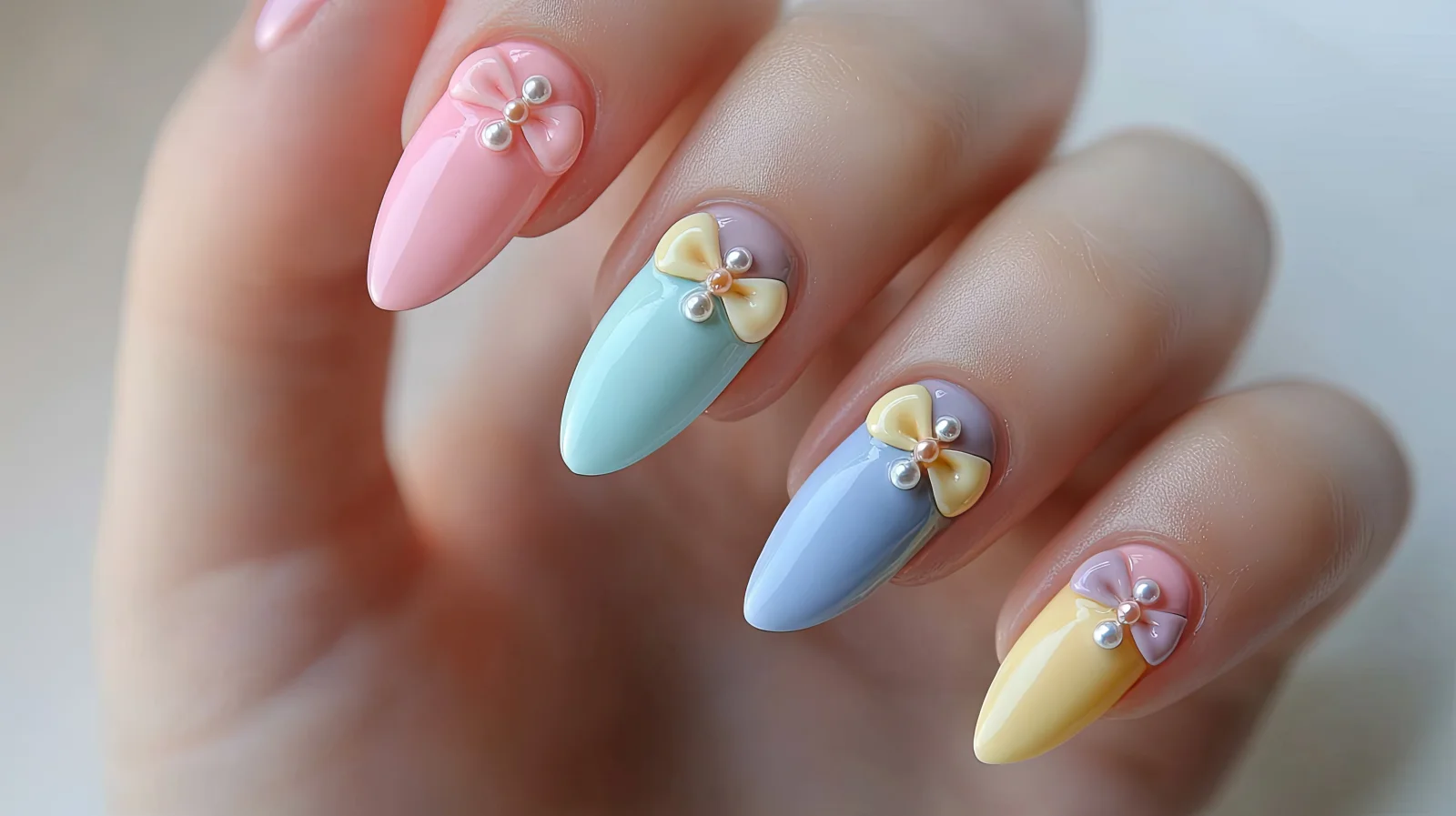
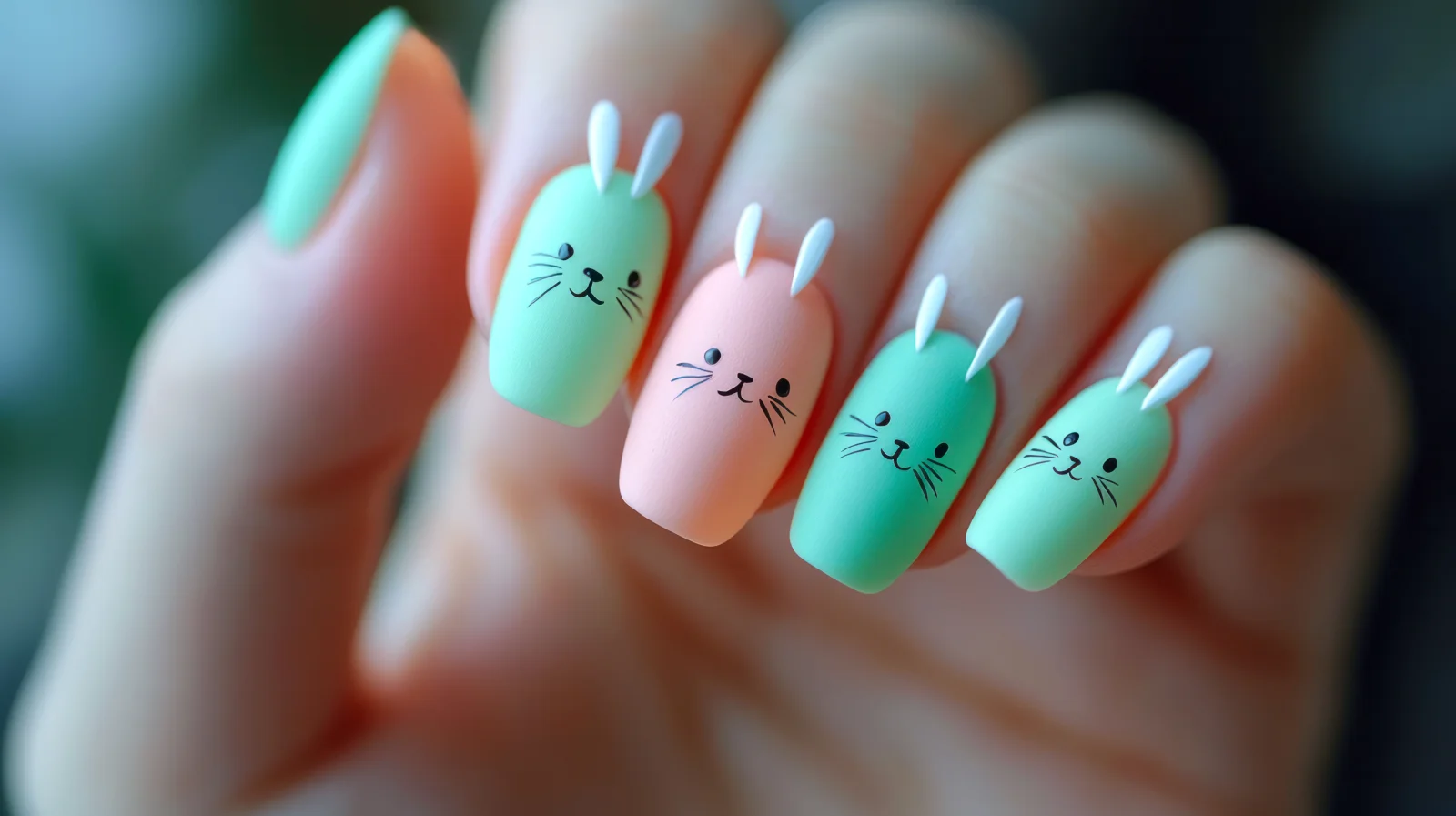
Hearts and figurative shapes. Small sculpted hearts turn up around Valentine's and as a year-round romantic accent. Other figurative shapes, ribbons, stars, simple charms, also appear in this category. The motifs tend to read as playful rather than formal.
Abstract and architectural. Raised swirls, textured ridges, sculpted lines, faceted geometric shapes, and structural elements that don't represent anything specific. This is the more design-forward end of the category and often pairs with chrome, mirror chrome, or strong colour for editorial-feeling work.
Choosing for your event or season
Different motifs suit different occasions, and the choice often makes more difference to the finished impression than the technical execution does.
Weddings. Subtle florals on the ring finger, small sculpted bows, or fine textured detail tend to be the safest bridal choices. The base is usually nude, soft pink, French, or baby boomer. Anything that reads as overly themed or seasonal tends not to age well in wedding photographs that get looked at for years afterwards.
Festive and seasonal events. Winter holidays, New Year, Valentine's, Easter, and similar moments are where themed and character pieces tend to feel right. Snowflakes for December, hearts for February, pastel floral motifs for spring. Seasonal motifs work because they read as celebratory in the moment without trying to be permanent classics.
Photoshoots and editorial. Abstract and architectural pieces tend to do well here because they're built to be seen, and the wear window is short enough that fragility matters less. Larger florals and dramatic full-set 3D also belong in this context.
Casual occasions and dates. Small bows, single accent florals, or a discreet sculpted detail can lift an everyday manicure into something more considered without being too much for daily life.
Spring and summer. Florals and pastel motifs tend to feel right for warmer months. Lighter, smaller elements often suit warm-weather looks better than heavier sculpted pieces that can feel out of season.
Autumn and winter. Bows, abstract metallic detail, snowflakes, and richer textural elements tend to land well alongside the heavier outfits and indoor lighting of cooler months.
Pairing with other decor
3D rarely sits alone on a nail, and the pairings can change the look considerably.
With crystals. A pearl or crystal at the centre of a sculpted flower, or a scatter of small stones around a 3D element, is one of the most common pairings. The combination can read as bridal-elegant, particularly with neutral bases. Worth knowing that adding crystals to a 3D piece increases both the cost and the fragility, since both elements catch on things. For more on crystals specifically, see Swarovski crystals and rhinestones.
With gold foil and metallic accents. Gold leaf scattered around a sculpted floral, or thin metallic veins running into an abstract 3D piece, tends to soften the technical look of the sculpting and adds warmth. Particularly common in occasion and bridal work. See gold foil and metallic accents for the foil side.
With chrome. Chrome under a sculpted element, where the metallic mirror finish forms the base for a 3D detail, can produce a strong editorial effect. The chrome rub usually happens before the sculpting since it needs to bond to a tacky top coat. Mirror chrome paired with abstract 3D ridges is a recurring fashion-forward look.
With hand painting. A flat painted detail under or around a 3D element, such as painted leaves leading into a sculpted flower, can extend the design without making the whole nail too dimensional. For more on flat painted work, see hand-painted designs.
With French and baby boomer bases. Probably the most-requested combination overall. A clean French or baby boomer base on every nail with a single 3D accent on the ring finger tends to read as elegant and considered without being heavy.
The general rule is that 3D usually wants to be the focal point. Combining it with other strong decoration on the same nail can work but needs careful balance; combining it with calm bases on the other nails almost always works.
What it costs
Prices below are approximate ranges as of 2026. Treat them as orientation rather than authoritative; check with the specific salon for current pricing.
In Bucharest, sculpted 3D decor typically adds 100 to 400 RON to a base manicure, depending on the size and complexity of the elements and how many nails carry them.
A single small sculpted accent on one nail tends to sit at the lower end of that range. More developed work, sculpted florals across two or three nails or several detailed elements, sits in the middle. Elaborate bridal-style designs or full-set sculpted work tends to land at the upper end or above.
Outside Bucharest, prices generally trend lower, with smaller cities often 20 to 35% below.
The variability is genuine. Two artists can quote noticeably different prices for what sounds like the same design, often because the time involved differs significantly with technique and how the artist prefers to build the elements. A quote based on a reference photo tends to be more reliable than a generic price.
Care: high-touch caution
3D elements tend to be the most fragile decoration on the menu, and care matters more here than for flatter decor.
The headline point is that anything raised off the nail is vulnerable to catching. Reaching into pockets, pulling on tights, drying hair with a towel, washing dishes, and similar everyday actions can catch the dimensional element and pop it loose. Adapting around the design for the first week or two extends its life noticeably.
If an element starts to feel loose, contacting the salon for a reattachment tends to be cleaner than waiting for it to come off entirely. Avoid trying to glue a fallen element back on at home; consumer adhesive isn't the same chemistry as gel and the repair tends not to last.
For events, booking close to the date is generally the safer plan. A 3D look is usually at its best in the first one to two weeks. For the broader nail-care basics, see healthy nails fundamentals.
Common questions
Which 3D motif suits a wedding best?
Subtle florals or small sculpted bows tend to be the most common bridal choices, usually in white, nude, or pearl on a soft base. Anything that reads as themed or seasonal can date the photographs.
Can I have a different 3D motif on each nail?
Possible, though most artists find that an accent approach reads better than mixed motifs across all ten nails. Variation across a single hand can feel busy in person even when it photographs cleanly.
Do small sculpted elements look proportionate on short nails?
Generally yes for tiny motifs like small bows, single small flowers, or compact charms. Larger sculpted florals and more elaborate elements usually want the additional surface of construction-length nails to sit cleanly.
Will a 3D motif look the same as the reference photo?
Skill is highly motif-dependent, and an artist who excels at florals may not have the same depth on bows or abstract work. A reference photo helps the conversation, but the closer the artist's portfolio is to the style you want, the closer the result tends to be.
Can I keep a 3D element from an old manicure for a future one?
Generally no. Sculpted elements are bonded to the gel and don't transfer. Some applied charms can be soaked off and reused, though many degrade in the acetone bath.
Bottom line
Sculpted 3D decor can be a good choice when the occasion calls for something dimensional and considered, particularly for weddings, photoshoots, festive events, or any moment where the nails are part of the picture. Florals tend to suit timeless looks, bows lean coquette and seasonal, abstract work suits editorial taste, and themed or character pieces fit specific moments. Pairing 3D with calm bases on the other nails almost always works; pairing it with crystals, foil, chrome, or hand painting on the same nail can work with care. For the technical and application side, see the 3D nail art technique article.