
Decor
6 min read
Hand-painted designs

By Andreea Mădălina
Founder, Fata cu unghiile
Hand-painted designs are one of the more personal decoration choices in Romanian salons. Rather than crystals, foil, or chrome doing the work, the decoration is a small painting on each nail, drawn for you in the chair. The look ranges from delicate florals to bold geometric blocks to seasonal motifs. This article covers what those designs look like, when each suits, and how they pair with other decor. For the application craft, see hand-painted nail art.
What hand-painted designs look like
The defining quality is visible brushwork. A design is built up from individual marks, and even sealed under top coat the strokes and small irregularities of a human hand tend to be visible up close. That hand-made quality is part of the appeal; decals and stamping look uniform in a way painted work usually doesn't.
A scattered floral has slightly different petals on each nail. A geometric design has lines that are clean but not laser-clean. For some clients that's the appeal; for those who want identical detail across ten nails, stamping or wraps tend to be a closer fit.
The medium is usually opaque or semi-translucent gel paint, giving a slightly raised quality under the top coat. Thinned paint produces watercolour-style washes that suit delicate florals.
Style families
Florals. A frequently requested category. Roses, daisies, cherry blossoms, wildflower mixes, botanical sprigs. Style ranges from delicate watercolour-like petals on a sheer nude to bolder illustrations in stronger colour. Reads as feminine and romantic; suits weddings, spring and summer wear, and wardrobes leaning toward soft tones.
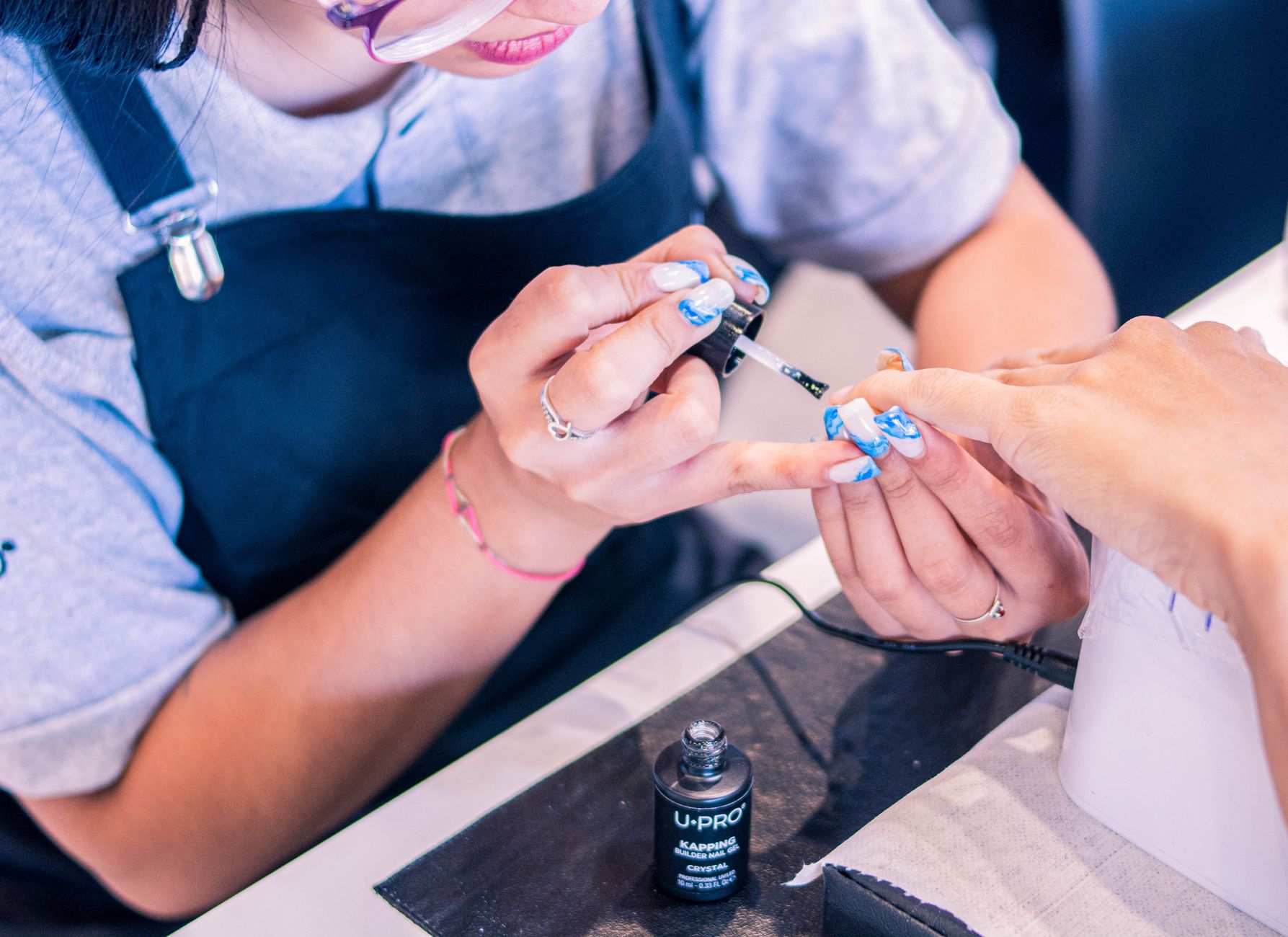
Abstract and painterly. Brushstroke effects, marble swirls, watercolour blends, freeform colour studies. Closer to fine-art reference than recognisable subjects. Suits clients who want decoration without a specific motif.
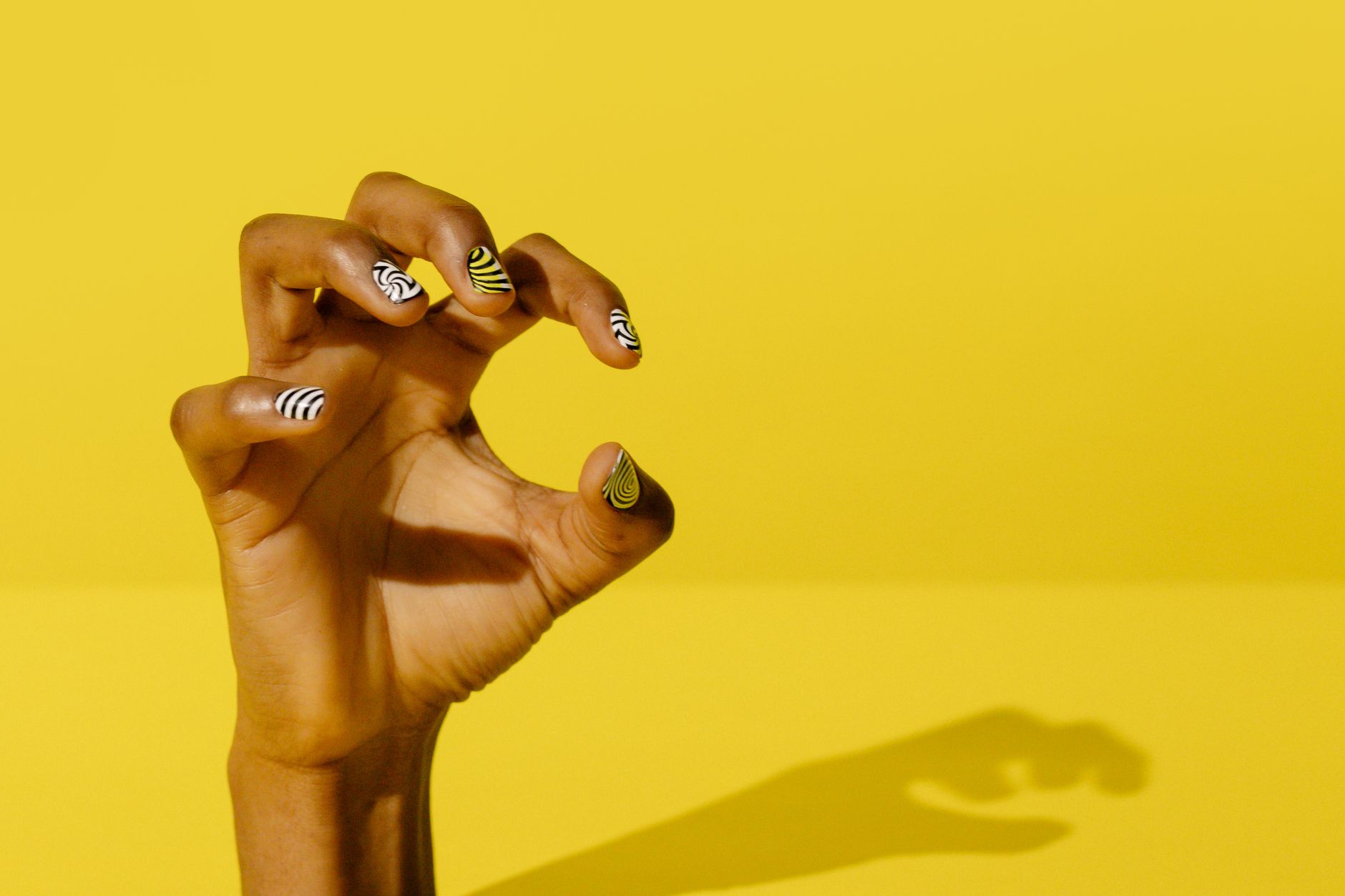
Seasonal and themed. Snowflakes in December, hearts in February, Easter pastels, autumn leaves, summer fruit. Many artists keep a small repertoire they produce confidently; popular for wear across a holiday.

Choosing for the occasion or season
For weddings and formal events, soft florals and delicate abstract work tend to read as elegant without competing with the rest of the look. Restrained palettes (nudes, whites, soft pinks, pale greys) are easier to wear with a range of outfits and photograph well in mixed light.
For everyday wear, geometric and abstract designs in restrained colour age more gracefully across two or three weeks than highly seasonal work, which can feel out of place once the moment passes. Many clients keep seasonal designs to a single accent nail.
For seasonal looks, the family that fits depends on the season's mood. Spring and summer take well to florals and light watercolour effects. Autumn suits warmer palettes and leaf motifs. Winter and holiday wear leans into seasonal motifs, jewel tones, and metallic-adjacent palettes.
Pairing with other decor
With crystals. A few well-placed stones can lift a painted design into something more occasion-appropriate. The common pattern is small accent crystals at the centre of a flower or around an abstract focal area. The painting carries the design; the crystals add light. See Swarovski crystals and rhinestones.
With gold foil. Foil works particularly well with painted florals, marble-effect designs, and abstract work in muted palettes. A few flakes through a floral arrangement, or a thin gold line accenting a geometric block, reads as quietly luxurious. For cooler designs, champagne or rose variations sit more comfortably than warm yellow gold. See gold foil and metallic accents.
With chrome. Chrome's continuous mirror finish can compete with painted detail rather than complement it, so the two are usually used in separate zones: chrome on one or two nails and painted work on the rest.
With French and baby-boomer bases. A clean French or baby-boomer fade makes a quiet base for delicate painted accents, particularly florals on the ring finger.
The rule of thumb: painted detail is usually the focal point. Stacking too many techniques on painted work can muddy the design.
What it costs
Prices below are approximate ranges as of 2026. Treat them as orientation rather than authoritative; check with the specific salon for current pricing.
Hand-painted decoration is one of the more variable pricing categories. Cost depends on the artist's experience, design complexity, and how many nails carry detail. In Bucharest, painted work commonly adds 80 to 300 RON to the underlying manicure. Accent work on one or two nails sits at the lower end; full-set detailed work or signature work by well-established artists sits at the upper end and can cost more again. Outside Bucharest, prices generally trend lower, with smaller cities often 20 to 35% below. Some salons price per detailed nail rather than as a flat upgrade.
Care between appointments
Same general aftercare as any gel-based service. The painted detail is sealed under top coat and wears alongside the underlying manicure. Gloss may dull at high-touch areas in the second or third week; some salons offer a fresh top coat refresh, though policies vary. Avoid frequent acetone-based products on the painted surface. For broader basics, see healthy nails fundamentals.
Common questions
Will all ten nails look identical?
Generally close in skilled hands, but rarely identical. Painted work has natural variation, and that variation is often part of the appeal. If precise uniformity matters more, stamping or wraps can be a better fit.
Will the design photograph well?
Usually yes when the design has clear contrast against the base and the artist has worked at a scale appropriate for the camera. Very fine detail can lose definition in phone photographs; broader brushwork photographs more reliably.
Can hand-painted designs work over my own length?
Yes, for most styles. Subtle florals and geometric work sit comfortably on natural-length nails. Detailed character work often benefits from the additional surface of constructed nails but isn't required.
How does this compare to stamping or decals?
Stamping and decals are pre-designed and applied as a unit, producing uniform results faster and at lower cost. Painted work is drawn directly onto the nail, with the warmth and variation of any hand-made object.
Bottom line
Hand-painted designs can be a good choice when you want decoration that feels personal and made by hand rather than printed. The family that fits depends on occasion, season, and aesthetic: florals lean romantic, geometric leans modern, abstract sits between, character work suits personal moments, seasonal designs work best as accent rather than full-set commitments. Pairing painted detail with crystals or foil tends to lift the look further, provided one element stays the focal point. Portfolio work in the style you want is the most useful signal before booking.