
Shapes
6 min read
Round shape nails

By Andreea Mădălina
Founder, Fata cu unghiile
Round is the quietest shape in the family. It follows the natural curve of the fingertip, keeps the nail at its natural width, and finishes in a soft arc with no taper and no flat top. The result is subtle and discreet, and tends to suit short nails particularly well. If you've ever asked your manicurist to "just clean them up" without specifying a shape, you've probably been wearing round.
What it is
Round shape (forma rotundă) is a nail filed to follow the natural curve of the fingertip. The sides stay parallel to the natural sidewalls, and the free edge is shaped into a gentle, even arc. There's no taper toward the tip and no flat section across it.
The defining feature is that round simply continues the contour the nail already has. A well-shaped round nail looks like a tidy, intentional version of how the nail grows on its own. Length is usually kept short to medium; round at very long lengths starts to look like an unfinished oval rather than a deliberate shape.
A clean round has symmetrical sides, an even arc at the tip, and the same width from cuticle to free edge.
How it differs from oval and almond
Round, oval, and almond sit close together on the rounded-shape spectrum, and people often use the names interchangeably. The differences are real, though.
Oval narrows slightly toward the tip. The sides taper inward a touch before rounding off. That small taper is what gives oval its softer, slightly more elongated feel.
Almond narrows much more, with rounded sides converging toward a soft point at the centre of the tip.
Round doesn't narrow at all. The sides stay at the natural nail width, and only the corners and free edge get curved. It's the shape closest to "the nail's natural outline, tidied up."
Visually, round reads as the most discreet of the three, oval as the most flowing, almond as the most elegant or considered. If a manicurist says "I shaped them round" and you wanted oval, the difference will be visible at the sides.

Who it suits
Round tends to suit:
Short nails especially well. The shape is designed to work at the length where the free edge is minimal, and round on short nails reads as neat and intentional rather than stubby.
People who want their nails to look natural rather than styled. Round is the shape that disappears the most into the hand; it doesn't draw attention to itself.
Hands-on lifestyles. Round has the lowest snag and break risk of any shape, which makes it a sensible default for cleaning, gardening, manual work, parenting small children, climbing, music, and any job that involves a keyboard or fabric.
Nail beds of any width. Because round doesn't add or remove visual width, it works on slim, average, and wide nails without exaggerating the proportion.
People recovering from damage. If your nails are peeling, splitting, or growing back from a break, keeping them short and round is generally the easiest shape to maintain while they recover.
It tends to be less suited to people who want a more dramatic, elongated, or editorial look. For that, oval, almond, or square will do more visual work.
Practical considerations
Round is the most forgiving shape day-to-day:
It tends to have the lowest break risk. There are no sharp corners to chip and no tapered tips to crack. Pressure on the free edge spreads evenly across the curve.
It's the least snag-prone shape. The arc has nothing for fabric, hair, or gloves to catch on, which means fewer surprise breaks during the day.
It's the easiest shape to maintain at home between salon visits. A quick file along the existing arc keeps the shape going; you don't need to rebuild a taper or correct sharp corners.
Growth between appointments tends to read as "slightly longer round" rather than as a different shape, so the look holds up well across a normal three to four week cycle.
How to ask for it
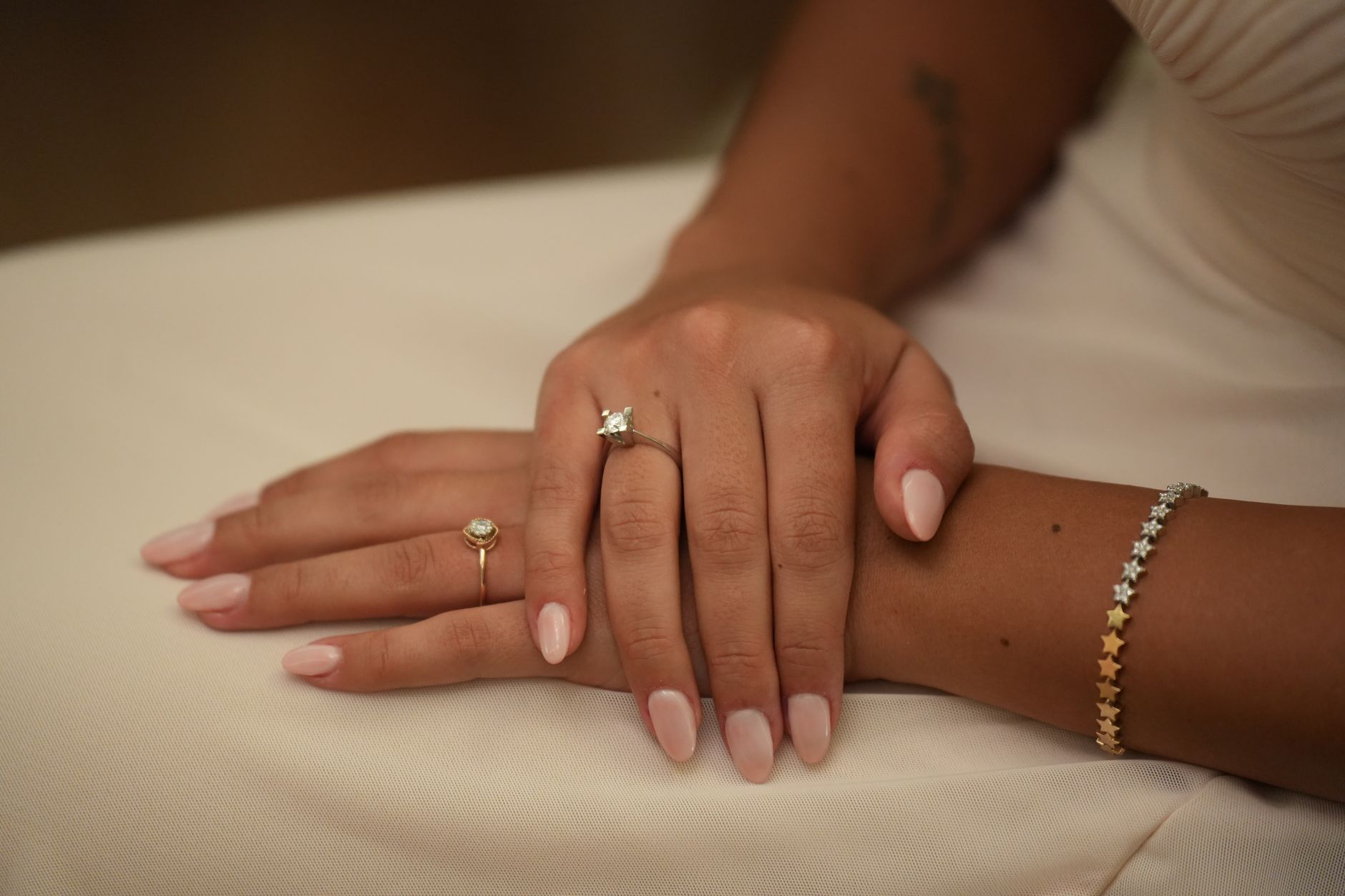
Most manicurists will recognise "rotund" or "round" directly. If you want to be precise, you can also say "follow the natural shape" or "no taper, just rounded corners and free edge." Showing a reference photo of a short, round, natural-looking manicure tends to be the clearest way to communicate it.
If you've previously worn oval or almond and want to switch to round, the artist will usually need to file the sides back to the natural width and reshape the tip. This may shorten the nails slightly. If you want to keep length, ask whether the existing length supports a clean round or whether a couple of millimetres need to come off.
What it costs
Round doesn't usually add to the cost of a manicure. It's one of the standard shapes included in any classic or semi-permanent service, and most salons treat it as a no-premium option.
Switching to round from another shape is generally a quick adjustment rather than a separate service.
Common questions
Is round the same as oval?
No, though they're often confused. Oval has a slight taper toward the tip; round keeps the natural width all the way out. The difference is small but visible side by side.
Will round make my fingers look shorter?
Slightly, compared to oval or almond. Round doesn't add visual length the way tapered shapes do. If your nail beds are already short and you want lengthening, oval is usually a better choice. If you're happy with how your hands look naturally, round won't change that.
Is round only for short nails?
It works best at short to medium lengths. At longer lengths it tends to start looking like an unfinished oval. If you want length, oval or almond usually carries it better.
Can I do round at home?
Yes, more easily than most other shapes. A glass or fine emery file along the existing curve, in one direction, is generally enough to maintain it between salon visits.
Is round a good shape for damaged or weak nails?
Often, yes. The lack of corners and tapered tips means there are fewer points of failure, and short round is generally the easiest shape to maintain while nails recover. For broader recovery advice, see healthy nails fundamentals.
What polish styles suit round?
Most styles work. Round tends to be a discreet canvas, so single colours, sheer pinks, soft neutrals, and classic French all read well. Bold or highly graphic art can also work but may feel more at home on a more structured shape.
Bottom line
Round can be a good choice when you want nails that look tidy, natural, and low-fuss rather than styled. It tends to be the most forgiving shape day-to-day, suits short lengths particularly well, and pairs with almost any polish. If you've never thought about shape and your nails just look "normal," round is probably what you're already wearing, and there's nothing wrong with that.